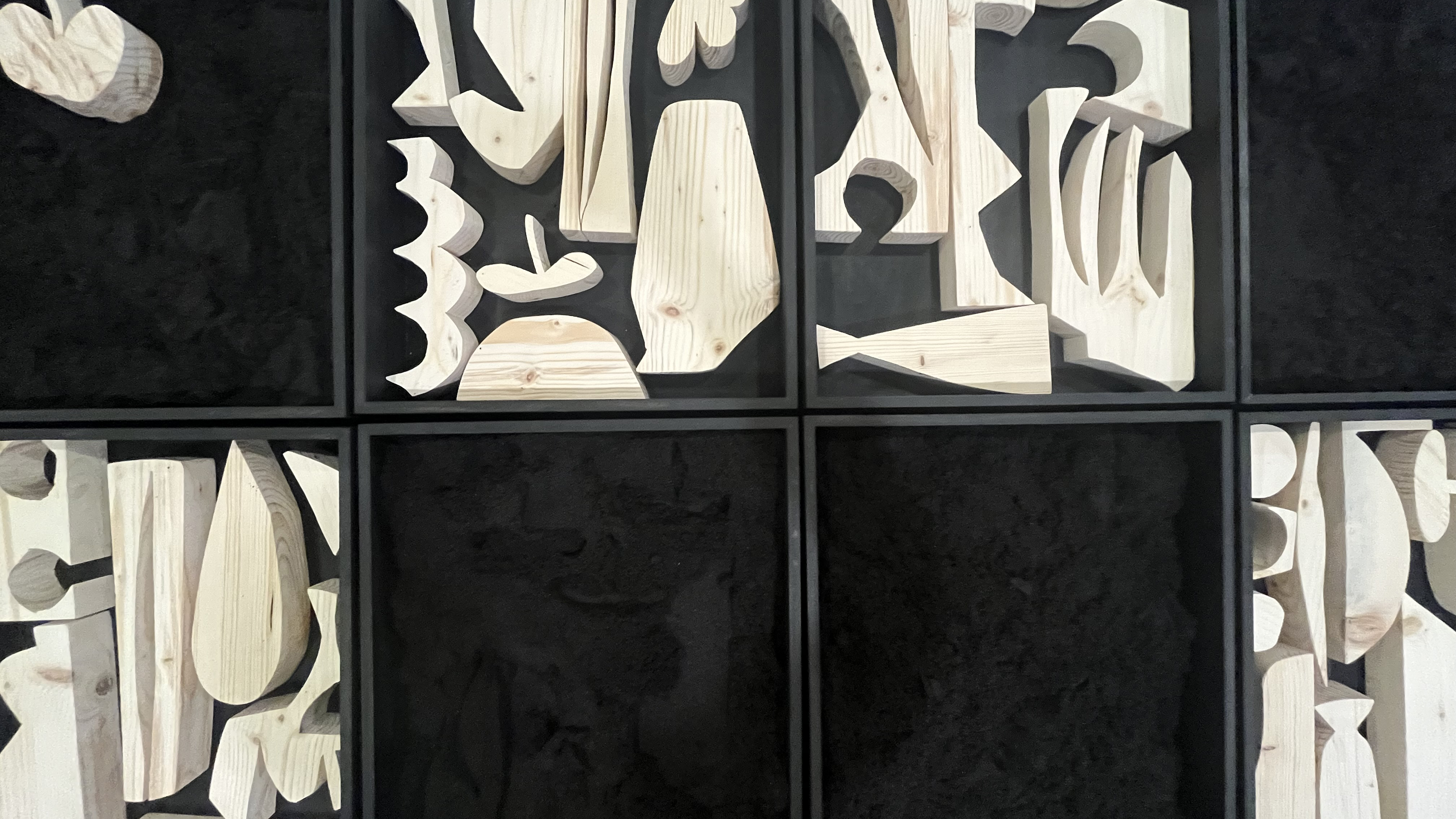
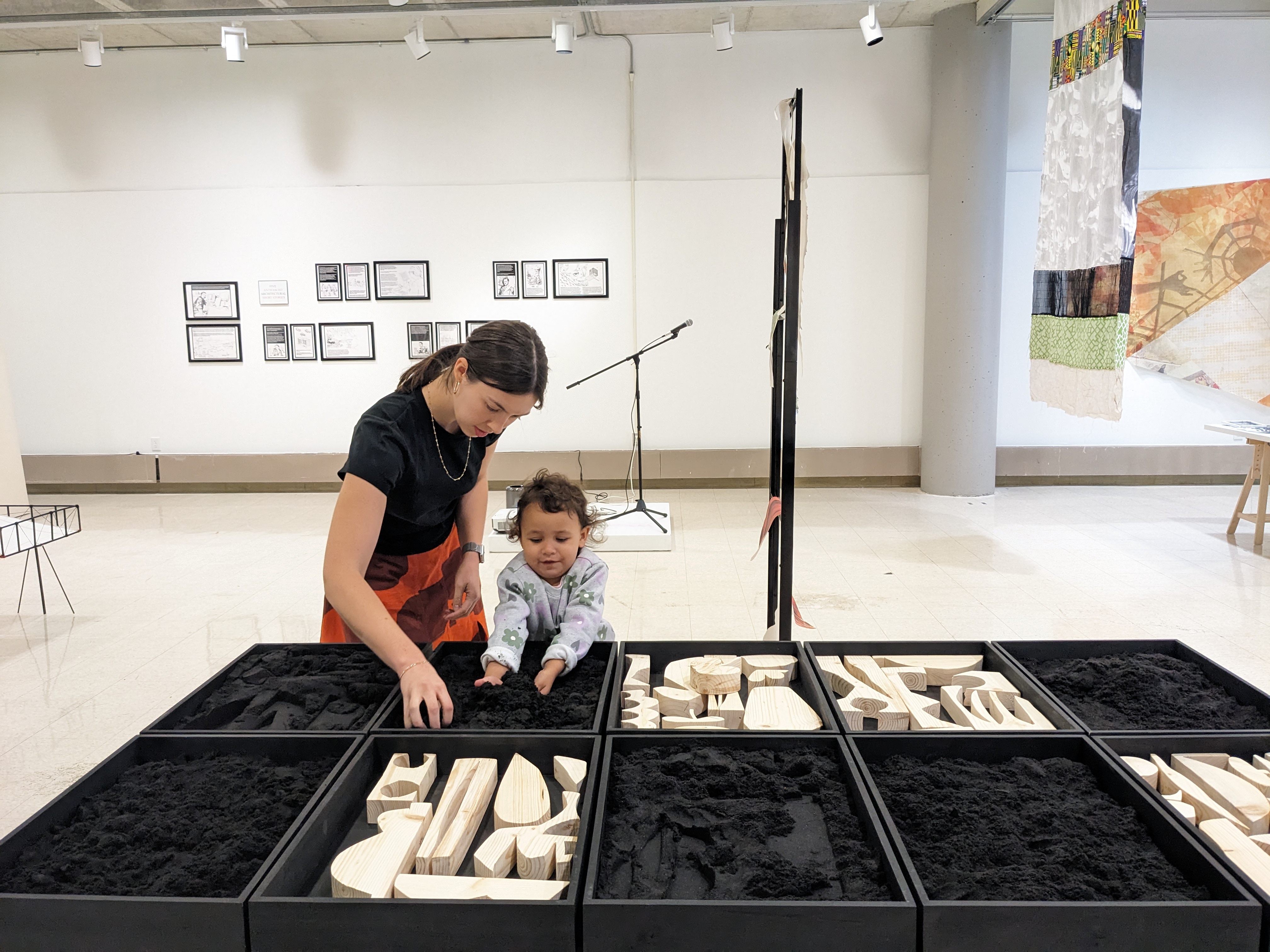
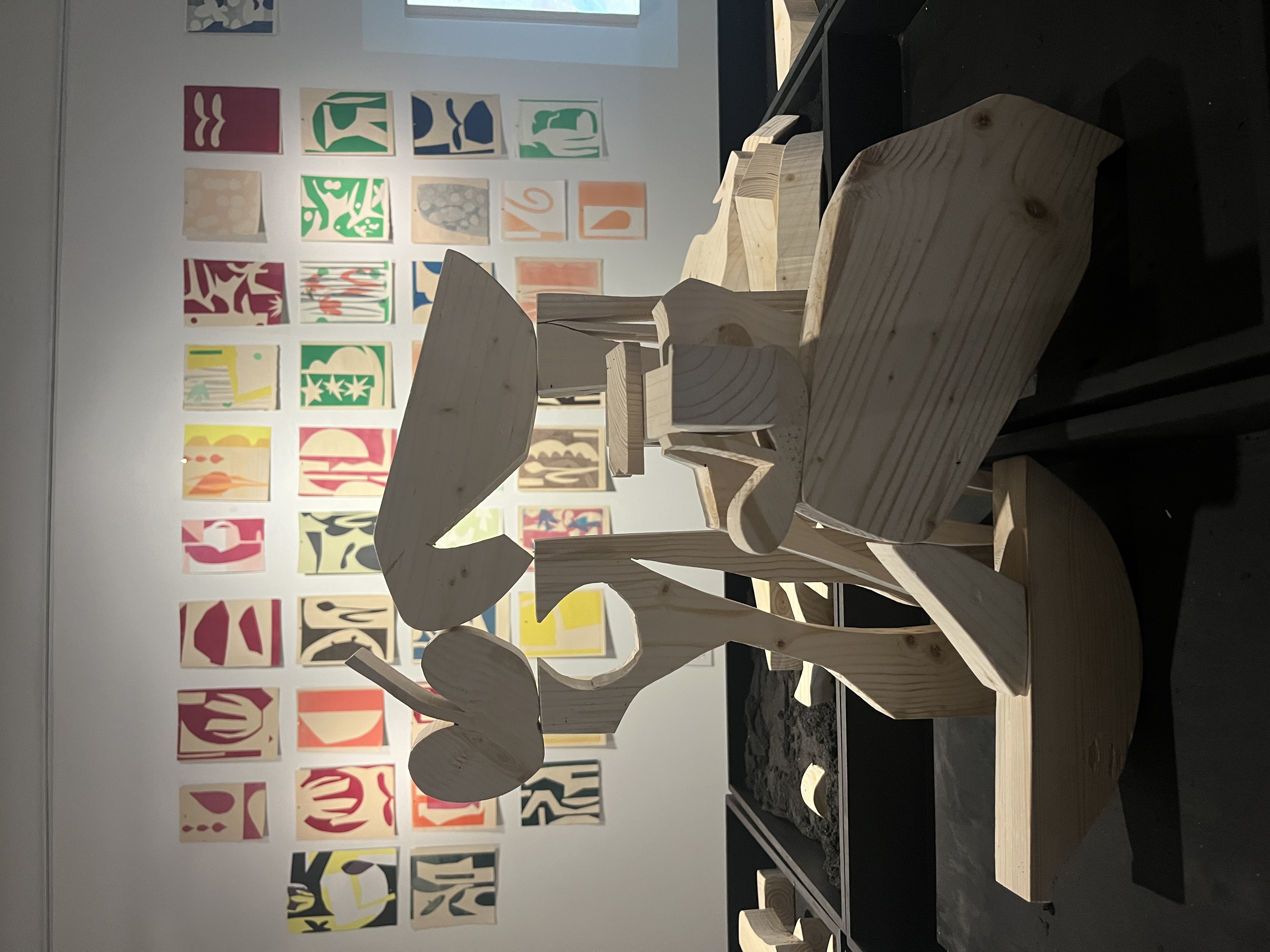
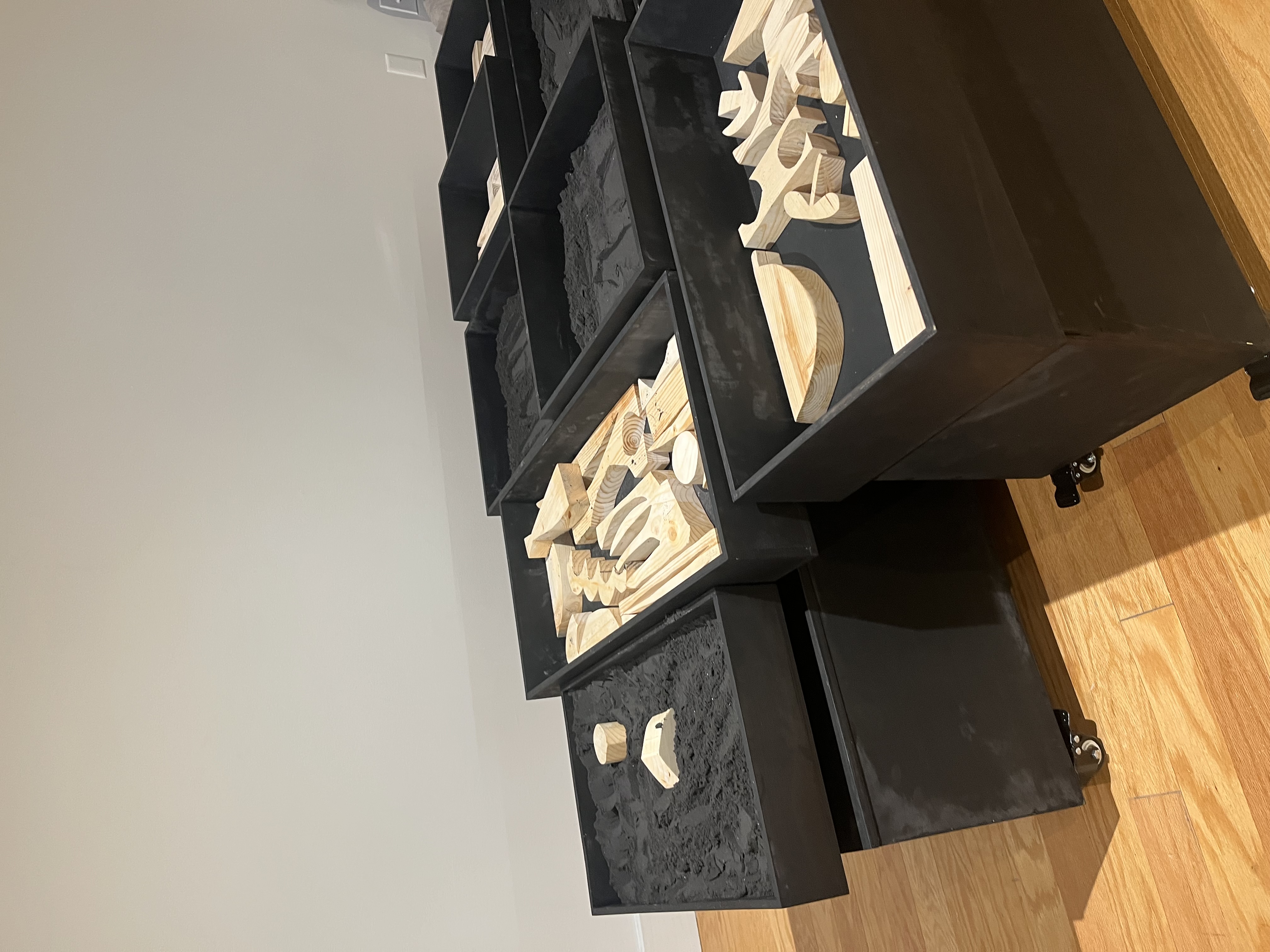
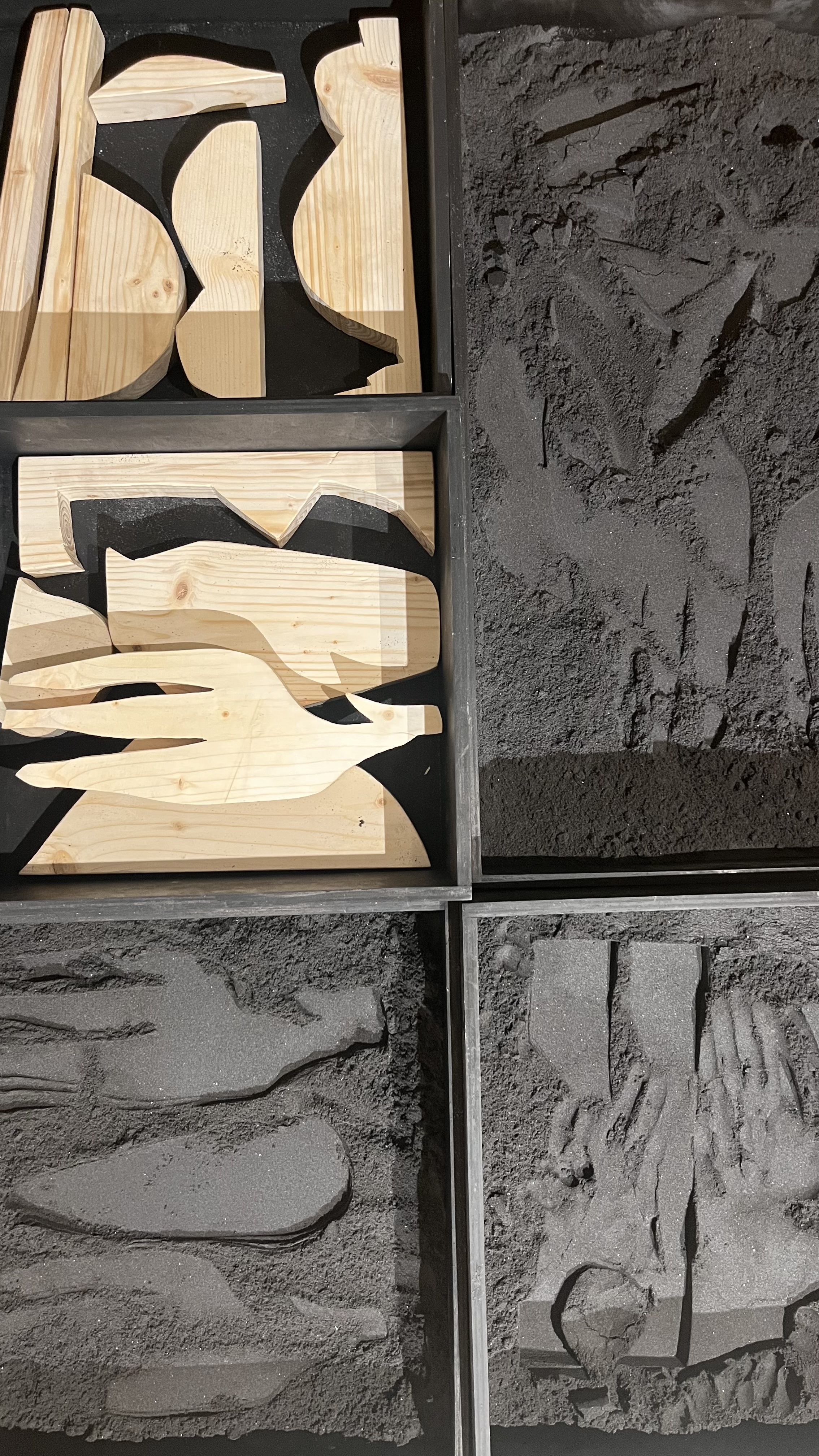
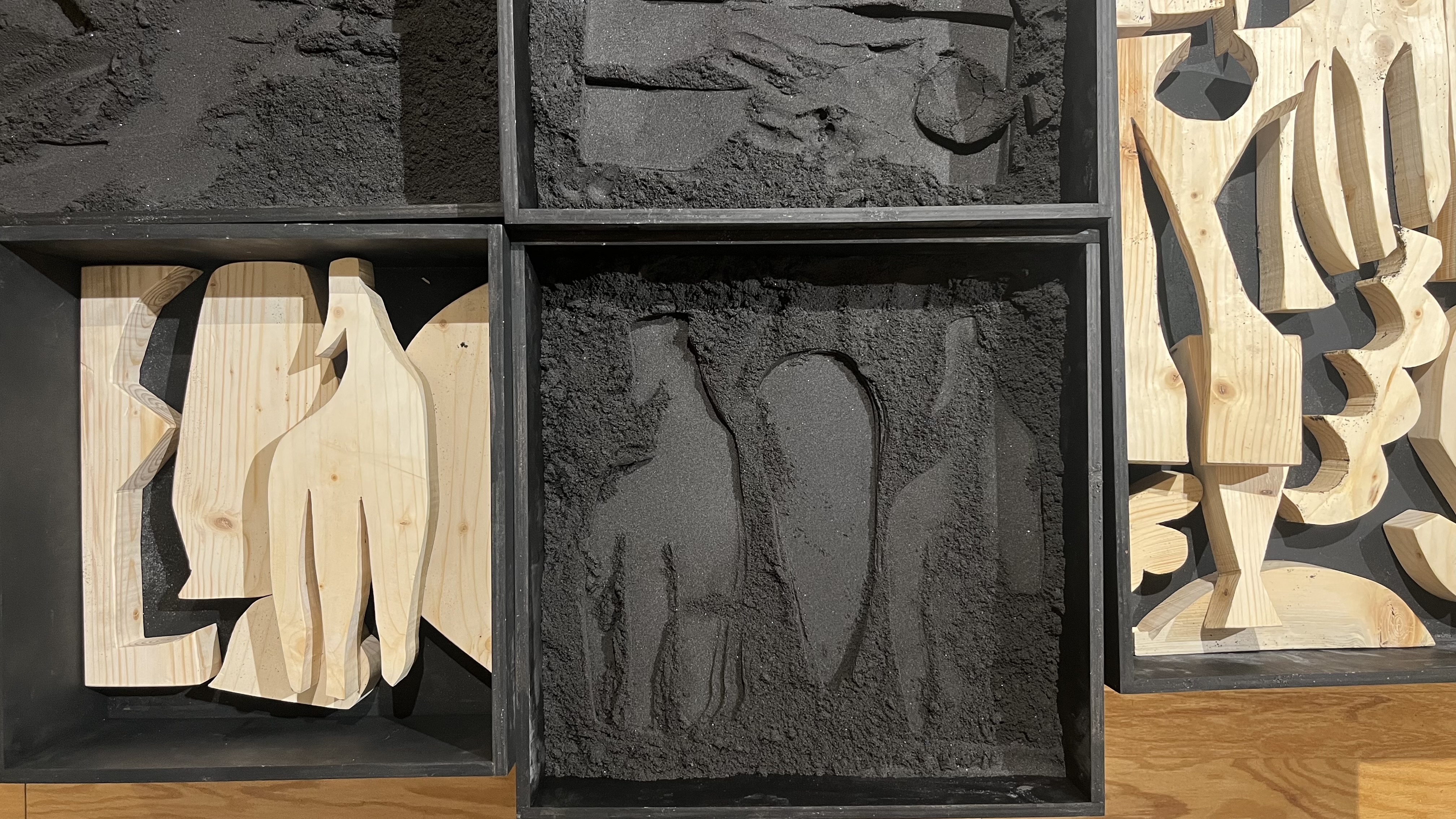
Monotype stencils are traced on wood and cut out to create shape blocks. Like the paper shapes, pressed against the printing paper to create an embossment, the blocks could be handled and used to emboss sand. Sandboxes became one of the first widespread play structures in Germany around 1908. Connecting earth, building, and imaginary play, I wanted to take the experience of the sandbox and turn it into a drawing tool. Participants each found their strategies for making images, building around the blocks to create an edge, placing blocks side by side to form new shapes, and agitating the sand to introduce air and make it easier to emboss. The trays and sand, saturated black, contrast existing expectations about what a sandbox looks like. Carefully crafted, the formal context elevates play to be in dialogue with the artwork without losing the beauty of the sand’s informality. These trays, displayed in a grid, lead people to collaboratively compose across images. The sand becomes a never-ending substrate for drawing. Adgetate the surface with your fingers and start again. Louise Nevelson’s sculptures made from scavenged materials on the streets of New York were an inspiration for this work. Turning to found materials during wartime rations in the 1940s, Nevelson composed her environment into artwork through shape. Composed in black boxes that were easier to handle, she combined them together to create monumental forms. My sandboxes, raised on stilts are placed on pedestals with caster wheels, are designed to be reconfigured and moved around. To bring the gallery closer to the playground and bring artwork into the park.